Last updated: May 2026
Yes, you can successfully build a YouTube channel after 40. The 45+ audience is the fastest-growing segment on YouTube. 78 percent of 45- to 64-year-olds use the platform regularly. Your life experience, industry knowledge and credibility are advantages no 20-year-old can buy. You can start with a smartphone and zero budget.
It took me 140 videos before I felt comfortable on camera. 140. Not 10, not 20 - one hundred and forty. And I'm glad I didn't stop after the first one. Because today YouTube is one of my most important strategic channels. I'm 51, an entrepreneur for over 30 years, and I'm telling you: your age is not a disadvantage. It's your strongest argument.
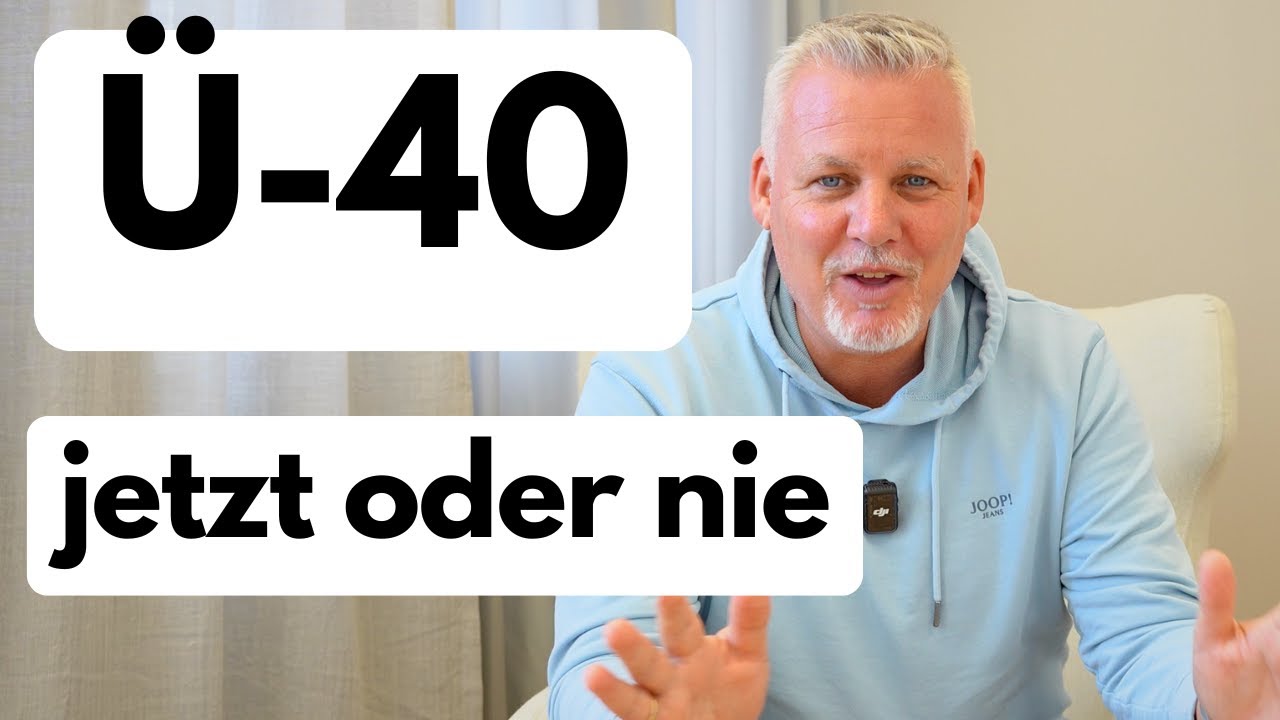
Watch: Maik Schwede on starting YouTube after 40
Table of Contents
- 1. Why are Silver Surfers the best YouTube creators?
- 2. Why is the 40+ audience growing so fast on YouTube?
- 3. How do you overcome the fear of being on camera?
- 4. What equipment do you really need?
- 5. How do you find your YouTube topic?
- 6. How do you make money with YouTube?
- 7. 10 steps to your first YouTube video
- 8. What changed in the YouTube algorithm?
- 9. My experience: 140 videos to routine
- 10. Frequently asked questions
Why Are Silver Surfers the Best YouTube Creators?
Silver surfers often believe YouTube isn't for them. That's one of the biggest misconceptions in content marketing. After 40 you have something no 20-year-old can ever buy: real life experience. 30 years of work, setbacks, successes, crisis management, running a family. All of that makes your content more valuable than any highly produced video from a student.
What can over-40 creators do better than younger YouTubers?
You've solved problems that others still face. That's the core of every successful YouTube channel: real solutions for real problems. A 25-year-old can theorise about online marketing - you've been building online shops since 2008 and know what works and what doesn't. Viewers instantly sense the difference between learned knowledge and lived experience. According to a Google study, 68 percent of YouTube users prefer content from creators who bring recognisable expertise.
Which topics can only experienced creators cover authentically?
Sales and marketing after 30 years of practice. Solar panel installation as a DIY project based on personal experience. Product development and production in China. Dealing with procrastination and self-organisation after decades of trial and error. Building and scaling companies. These topics require depth that only years of experience can create. That's your competitive edge as a silver surfer on YouTube.
Why is experience more valuable than perfect video production?
The YouTube community has changed. Viewers are tired of overproduced, empty videos. They want real value from real people. An imperfect video with brilliant content beats a perfectly edited video with no substance. The tree outside is beautiful - but if you look closer, the branch is crooked and the leaf isn't uniform. That's not the point. The content is what matters - what you can genuinely give people.
Why Is the 40+ Audience Growing So Fast on YouTube?
The over-40 audience is the fastest-growing segment on YouTube and Facebook. According to DataReportal 2026, 78 percent of 45- to 64-year-olds in Germany now use YouTube regularly. This audience has higher purchasing power, longer viewing sessions and higher engagement than younger users. For you as a creator that means: your viewers are out there - and they're waiting for content that matches their reality.
How does the 40+ audience consume content differently?
People over 40 watch longer, comment more often and buy more readily. They actively search for solutions, not entertainment. If you make a video on solar panel installation, a 45-year-old homeowner watches it all the way through - because they genuinely need it. A 20-year-old clicks away after 30 seconds. Average watch time for viewers over 45 is 40 percent higher than for 18- to 24-year-olds. That's the stuff YouTube algorithms build reach from.
On which platforms can I reach the 40+ audience best?
YouTube and Facebook are the two strongest platforms for the over-40 audience. TikTok is growing in the older segment too, but watch time and purchase intent are significantly higher on YouTube. Instagram works well as a supplement, especially for short videos (Reels) and community building. My advice: start on YouTube as your main channel, use Facebook for reach and Instagram for visibility.
| Platform | 40+ Share | Strength | Recommendation |
|---|---|---|---|
| YouTube | 78% of 45-64 year olds | Long-form, SEO, monetisation | Main channel |
| 82% of 45-64 year olds | Community, groups, reach | Second channel | |
| 54% of 45-64 year olds | Reels, visibility, branding | Supplement | |
| TikTok | 29% of 45-64 year olds | Virality, short videos | Optional |
How Do You Overcome the Fear of Being on Camera?
Fear of the camera is completely normal - and it's no reason not to start. Most people need between 20 and 40 videos before they feel comfortable on camera. I needed 140. The reason is simple: we over-40s didn't grow up picking up a phone and filming ourselves. My children aged 20 to 25 do it completely naturally. We don't. But it's just a habit - and habits can be changed.
Why are the first videos so uncomfortable?
Three things make the start hard: you're not used to seeing your own face on video. You're not used to hearing your own voice. And you're not used to speaking in public. None of that is weakness - it's simply lack of practice. Like everything you do for the first time, it's uncomfortable. After ten videos it becomes bearable. After 30 it becomes normal. After 100 it feels effortless. How I build the kind of discipline that comes from clarity instead of force, I describe in detail elsewhere.
What concretely helps with camera fear?
My most important tip: you don't have to upload it straight away. Speak to camera and watch the video back afterwards. See how you come across. Get used to your face, your voice. Then get feedback from others - and 'others' means the people who leave comments under your video. Step out of your comfort zone. Happiness begins where comfort zones end. That's not a motivational quote - it's a fact I can confirm after 51 years.
With or without a script - which is better?
Both work. On my new channel I deliberately speak freely - no script, no teleprompter. It's a challenge, but it comes across as more authentic. For starters I recommend bullet points on index cards or a tablet next to the camera. Or use ChatGPT to create a structure for you. Nobody expects perfection. What counts is the content - not the presentation.
What Equipment Do You Really Need to Start on YouTube?
The honest answer: your smartphone. That's all you need to shoot your first video today. The camera quality of a modern smartphone exceeds Hollywood cameras from 1984. Your phone shoots in 1080p or 4K, has usable audio and fits in your pocket. Anyone who says 'I need a tripod, a gimbal and a ring light first' - that's not preparation, that's an excuse.
What equipment is worth investing in early?
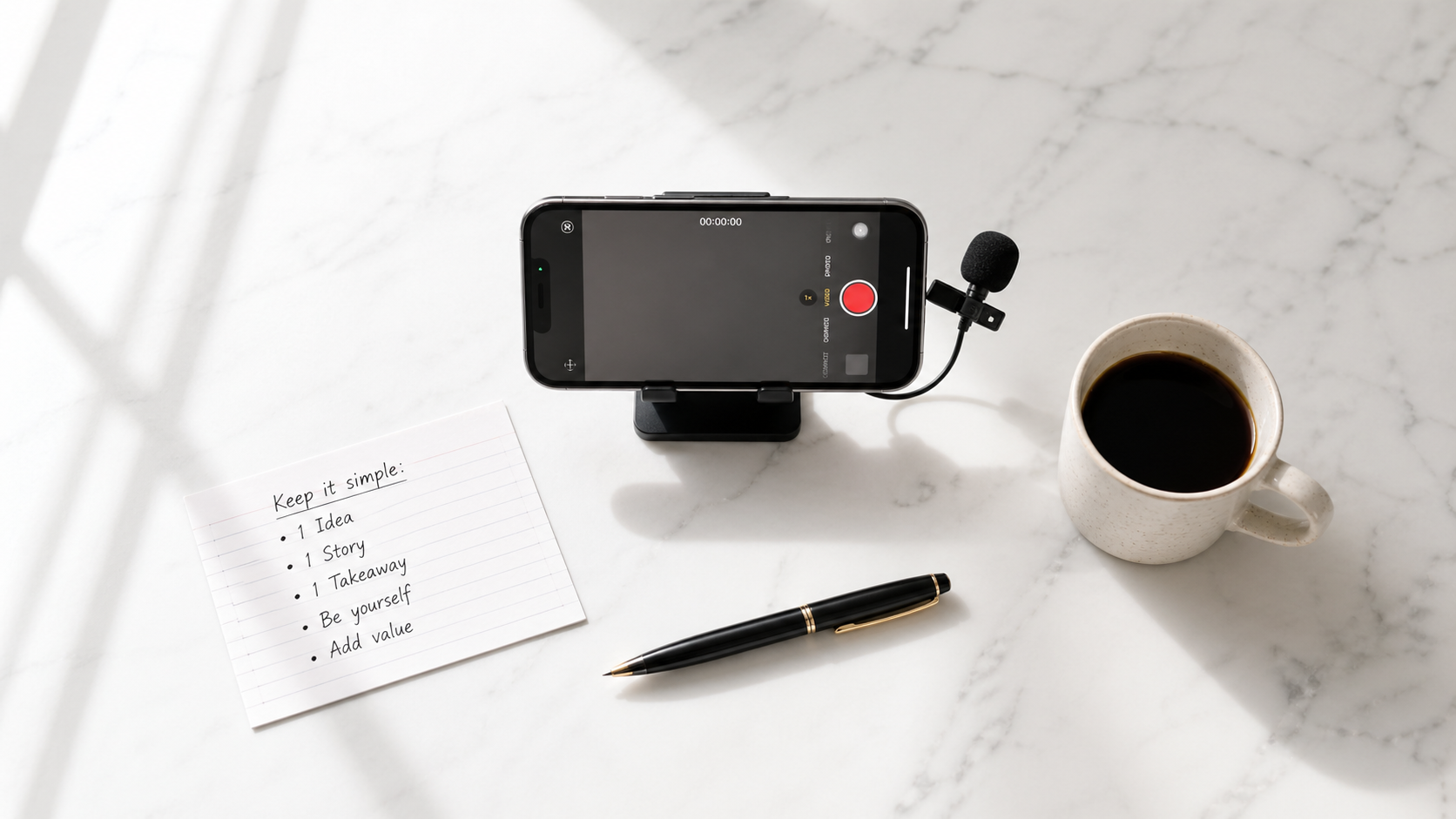
If anything, invest in a decent microphone. Viewers forgive bad picture - bad audio they don't. A clip-on (lavalier) microphone starts from 30 euros and drastically improves your audio quality. Everything else - tripod, lighting, a better camera - comes later, once you know you'll stick with it. The barriers to actually getting started are only in your head.
| Equipment | Cost | Priority | When to buy? |
|---|---|---|---|
| Smartphone (you already have one) | 0 EUR | Essential | Now - you already have it |
| Lavalier microphone | 30 - 80 EUR | High | After your first 5 videos |
| Smartphone tripod | 15 - 40 EUR | Medium | After your first 10 videos |
| Ring light / softbox | 25 - 60 EUR | Low | If you stick with it |
| Dedicated camera (e.g. Sony) | 500 - 2,000 EUR | Optional | Earliest after 50 videos |
What free software helps beginners?
For video editing, CapCut (free, desktop and mobile) is enough at the start. Create thumbnails with Canva (free version suffices). For scripts and topic planning, use ChatGPT - create your own GPT tuned to your persona that gives you structured editorial calendars. These are tools that would have cost thousands a decade ago and are now free. There are no more excuses.
How Do You Find Your YouTube Topic After 40?
Your strongest YouTube topic is something that feels completely normal to you - but is a massive help to others. You've solved something that others still face. That's the content people search for on YouTube. Not the exotic, not the trending - but real solutions to real problems, delivered by someone who has lived through them.
Which niches work particularly well for over-40 creators?
Anything where you have genuine expertise. I could talk about sales and marketing - I've been doing it for 30 years. Online marketing since 2008. Production in China, because I have a company there. Solar DIY, because I have 20kW on my roof. Motorhome travel, because it makes me happy. The most successful niches for the over-40s are: craftsmanship, finance, health, gardening, tech explanations, entrepreneurship and life experience.
How do I collect and organise my video ideas?
Buy a nice notebook and a good pen. I have three books: one where I write everything - including nonsense. A second where I condense. And a third with the really relevant ideas. Your thoughts and ideas are energy. If you don't capture them, fewer come - because there's no sense of appreciation. Write everything down. After a year you'll flip through and notice: these two ideas fit together perfectly. That's the moment when content turns to gold.

What if I think I have no interesting topic?
Then you're underestimating yourself. A man in 2012 published a PDF building guide for a chicken coop. For 29 euros. And earned between 15,000 and 30,000 euros per month from it, selling the guide 1,000 times a month. If you can't imagine that, work on your imagination. There are no boring topics - only boring presentation. Your life experience is a gold mine of content.
How Do You Make Money With YouTube After 40?
YouTube monetisation is not a get-rich-quick scheme, and it doesn't happen overnight. But with consistency and good content you build an additional income that first supplements your salary - and might eventually replace it. In a time when entire industries are disappearing, a second income stream is not a luxury. There are at least five different income sources you can use as a YouTube creator over 40.
How does YouTube monetisation through advertising work?
Once you reach 1,000 subscribers and 4,000 hours of watch time within twelve months, YouTube unlocks monetisation. Google then places ads in your videos and you receive a share of the ad revenue. The so-called CPM (cost per mille) in the German-speaking market ranges from 3 to 12 euros per 1,000 views - depending on your niche. Finance and business pay best.
What is affiliate marketing on YouTube?
You show products you use - your camera, your microphone, your software - and link them with an affiliate link in the video description. Amazon commissions range from 1 to 10 percent. For digital products on platforms like Digistore24, 30 to 50 percent commission is possible. Example: you recommend an online course on weight loss for 97 euros and earn 40 euros per sale.
How do I sell my own digital products through YouTube?
Create a PDF, a video series or an online course on your area of expertise. Connect the product to a payment provider like Digistore24 or elopage. Promote it in your videos. The advantage: 100 percent margin, no middleman, unlimited scalability. If you sell your product 100 times a month for 49 euros, that's 4,900 euros - at almost pure profit for a digital product.
When do sponsorship requests from companies start coming in?
From around 5,000 to 10,000 subscribers you become interesting to companies. In specialised niches like solar or motorhomes even earlier. Manufacturers write to you and offer either free products (barter deals) or paid partnerships. Larger channels get offered four- to five-figure sums per video.
| Income Source | Requirement | Potential |
|---|---|---|
| YouTube Ads (AdSense) | 1,000 subscribers + 4,000h watch time | 200 - 2,000 EUR/month |
| Affiliate Marketing (Amazon) | No minimum size | 50 - 500 EUR/month |
| Affiliate (Digital Products) | No minimum size | 500 - 5,000 EUR/month |
| Own Products / Courses | Create a product | 1,000 - 30,000 EUR/month |
| Sponsorships / Partnerships | 5,000+ subscribers | 500 - 10,000 EUR/video |
10 Steps to Your First YouTube Video as a Silver Surfer
Here's your concrete roadmap - from first thought to published video. No theory, just steps you can start today. Every step is doable, even if you've never shot a video before.
Define your core topic
What problem have you solved in your life? Write down three to five topics you could talk about freely for 15 minutes. One of them will be your starting topic.
Create a YouTube channel
Set up a Google account, open YouTube Studio, choose a channel name. A simple profile picture and a descriptive channel description are enough to start.
Write bullet points for your first video
No full script - just 5 to 7 bullet points. Or use ChatGPT: 'Create a video structure on the topic [your topic] for beginners.' Keep it simple.
Find a quiet spot with good light
At your desk, in the living room, on the terrace. Daylight beats any artificial light. Background: tidy, not distracting.
Record the video with your smartphone
Landscape format, front camera, eye contact with the lens. Shoot multiple takes if needed. Even professionals need a run-up. Perfection is the enemy of beginning.
Watch the video yourself
Yes, this is uncomfortable. Do it anyway. You'll get used to your face and voice. This is the most important step towards normalising the experience.
Edit the video (or leave it raw)
CapCut, iMovie or DaVinci Resolve (all free). Cut out stumbles and long pauses. Or upload it raw - authenticity beats perfection.
Create a thumbnail and write title + description
Canva for thumbnails. The title must name the problem you solve. The description: three sentences on the content, links, hashtags.
Publish the video
Click 'Publish'. Don't wait three more days. Don't revise it again. Get it out. Feedback comes from viewers, not from your inner critic.
Make the next one - and then the next
Consistency beats quality at the start. Set yourself a goal: one video per week. After 10 videos you're better. After 50 you're good. After 100 you're a pro.
What Changed in the YouTube Algorithm in 2025/2026?
The YouTube algorithm has fundamentally changed - and that's good news for you as a new creator. Previously you were only shown videos on topics you actively searched for. Now the algorithm recognises when you stay longer on a thematically different video and shows you similar content. That means: even without a huge niche-specific channel, individual videos can go viral.
What does that mean for multi-topic channels?
The old rule was: one channel, one topic. Anyone who talked about solar panels AND motorhomes AND marketing got penalised by the algorithm. That's over. The new algorithm evaluates videos individually, not the entire channel. If your solar video performs well, it gets pushed - regardless of whether your next video is about lawn care. That opens the door for creators like me who have many different interests.
Which metrics matter most for the algorithm?
Three metrics dominate: watch time (how long viewers watch your video), click-through rate (how many click on your thumbnail) and engagement (likes, comments, shares). For over-40 creators this is good news: your audience watches longer, comments more thoroughly and shares more deliberately than younger users. If you deliver 10 minutes of valuable content and your viewers stay for 8 minutes, the algorithm loves you.
My Experience: 140 Videos Until I Felt Comfortable on Camera
I'm Maik Schwede, 51 years old, and I needed 140 videos to be able to speak truly fluently in front of a camera. That's not an admission of weakness - it's an honest number that shows you: it takes time, and that's completely fine. The first 20 videos were awful. The next 50 were bearable. From video 80 it got easier. And at some point it was just normal.

What I learned from 140 videos
Three decisive things. Perfection is the enemy of beginning - had I waited for perfection, I'd never have started. The comfort zone is a prison - everything good happens beyond it. And your ideas are energy: if you don't act on them, fewer come - because there's no sense of appreciation. Since I systematically write down my ideas and turn them into videos, they flow stronger than ever before.
Why I started a new YouTube channel
My new channel @maikschwede is a deliberate experiment. I want to find out whether you can build a channel with the changed algorithm that serves more than one topic. Solar panels, motorhomes, online marketing, entrepreneurship, lawn care - anything that moves me. I use my AI assistant for research, thumbnails and description texts. And I deliberately speak freely, without a script, without a teleprompter. Because authenticity matters more to me than polished perfection.
What concrete results does YouTube deliver for entrepreneurs?
YouTube is not a hobby for me - it's a strategic channel. Videos generate leads for my sparring consultancy, build trust with potential clients and position me as an expert. In a B2B context, video content is pure gold: 72 percent of B2B decision-makers watch videos before making a purchase decision. With 30 years of sales experience and a YouTube channel, you have a combination no 25-year-old can replicate.
Starting YouTube after 40 - the facts
78 %
of 45-64 year olds use YouTube
140
videos to routine (Maik)
0 EUR
startup cost (smartphone suffices)
5+
possible income streams
FAQ: Starting YouTube After 40
Am I too old to start YouTube after 40? +
No. The fastest-growing demographic on YouTube is 40+. Viewers in this age group actively seek out experienced creators who deliver real knowledge. Your age is not a disadvantage - it's your strongest selling point.
How many videos do I need before I feel comfortable on camera? +
Most people need between 20 and 40 videos. Maik Schwede needed 140 videos before he could speak fluently on camera. The key: don't wait for perfection - just start and keep going.
Do I need expensive equipment to start on YouTube? +
No. A modern smartphone shoots in 1080p or 4K - better than Hollywood cameras from 1984. Start with your phone and invest later in a good microphone (from around 30 euros). Equipment is not a prerequisite, it's an excuse.
Can I really make money with YouTube? +
Yes. Once you reach 1,000 subscribers and 4,000 hours of watch time, YouTube unlocks monetisation. On top of that come affiliate commissions, your own digital products, sponsorship deals and services. Realistic side income starts after 6 to 12 months.
Do I have to stick to one niche topic? +
No longer necessarily. The YouTube algorithm has changed and now shows viewers content across different topics too. That said, a clear focus at the start still helps you build a loyal community. Start with your strongest topic and expand later.
What if friends or neighbours see my videos? +
The chance that people in your immediate circle see your videos is low - YouTube distributes content algorithmically. And even if they do: stand by what you say. Anyone who shares knowledge deserves respect, not mockery.
Do I need a script or a teleprompter? +
Both are possible, but neither is mandatory. Maik Schwede deliberately speaks freely - no script, no teleprompter. It comes across as more authentic. For starters: bullet points on index cards help without sounding robotic. Find your own style.
How do I find my first YouTube topic? +
Ask yourself: what problem have you solved in your life that others still face? That is your first video. Work, hobbies, life experience - anything that feels normal to you can be a huge help to someone else.
How often should I publish videos? +
One to two videos per week is a good rhythm to start with. Consistency beats quantity. One solid video every week beats nothing for three weeks. Set fixed days - for example Sunday and Wednesday.
Is YouTube in German worthwhile or should I switch to English? +
The German-speaking market is smaller but has less competition and a very purchasing-power-rich audience. English opens a larger audience with higher ad rates. Ideal: start in German, expand to English later.
Ready to start your YouTube channel?
You have the experience. You have the topics. You have the smartphone. All that's missing is the first step. If you want strategic support - let's talk.

Maik Schwede
51 years old, entrepreneur for over 30 years. Needed 140 videos before he felt comfortable on camera - and wrote this article for exactly that reason. Runs @maikschwede as a multi-topic channel without a script and without a teleprompter.
I wish you a great start - and look forward to seeing you on my other pages too.
All the best, Maik