Why 99% of All Websites Are Invisible to Google and AI - and What You Can Do About It
Last updated: May 2026
99% of all websites are invisible to Google and AI systems like ChatGPT or Perplexity. The four most common causes: missing schema markup (no digital ID card for machines), no llms.txt (AI business card), missing source citations and E-E-A-T signals, and purely client-side rendering that AI crawlers cannot read. Since the Google March 2026 Core Update, such sites are losing visibility rapidly.
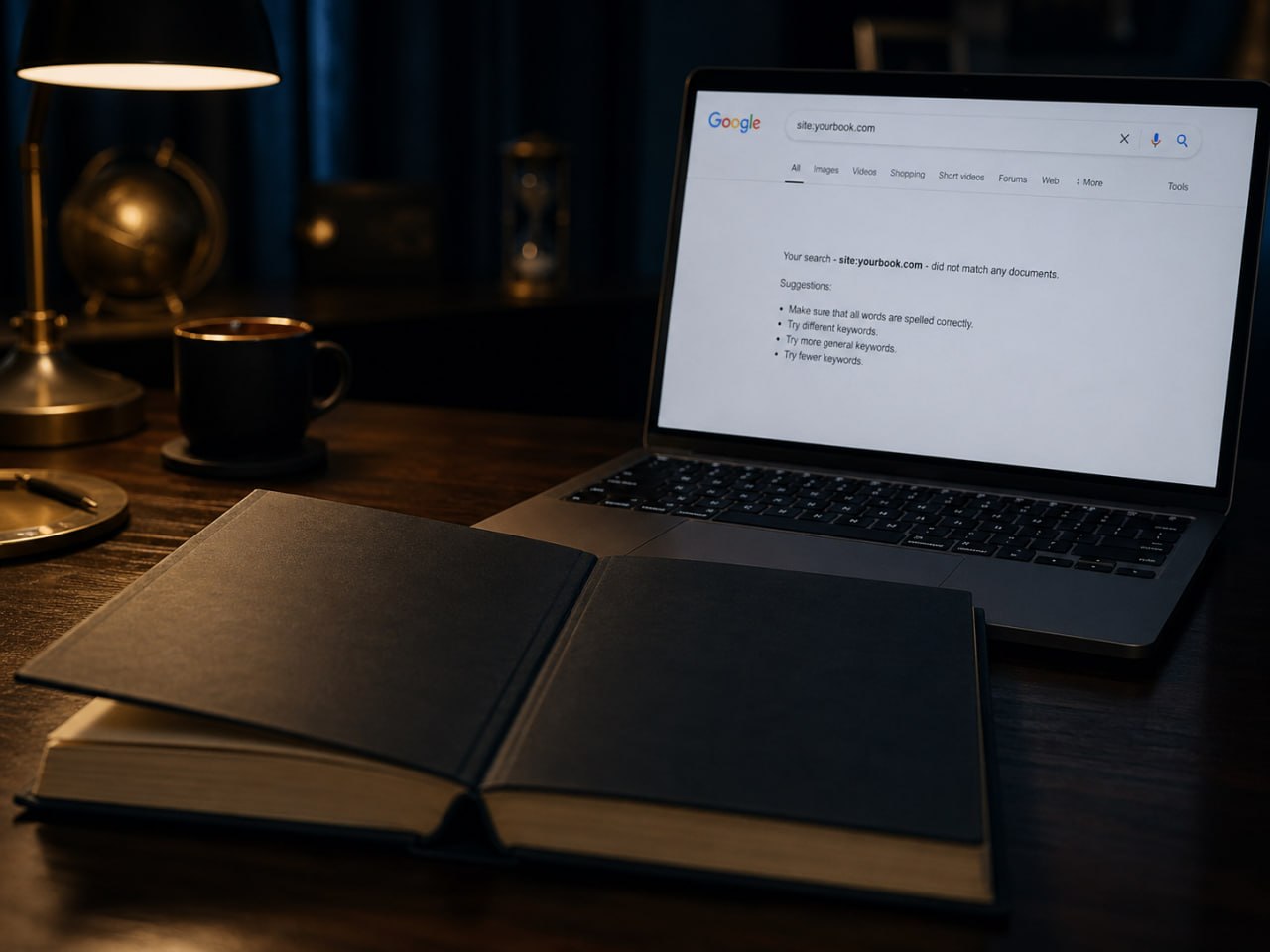
Table of Contents
The Problem: Two Agencies, Zero Results
In 2024 I told my SEO agency what was coming. That Google would require structured data. That AI crawlers would change everything. That we needed to prepare. They implemented nothing. In October 2025 I fired them.
The next agency? Same story. Monthly reports with colorful charts and technical terms - CTR, CPA, impressions - but without results that any normal entrepreneur would understand. Let alone see.
So I spent two months studying the topic and built my own SEO/GEO analysis tool. Not as a business idea - out of pure frustration. Because as an entrepreneur with almost 20 years of SEO experience I wanted to know what was really going on with my websites. In a language I understand. How I use AI in my day-to-day work in general, I describe in my article about my personal AI assistant.
And then something happened that I did not expect: the people I showed the first analyses to were enthusiastic. Not because of the technology - but because for the first time they understood why their website is invisible. Today paying customers use the tool. Without marketing, without advertising. Simply because it solves a problem that nobody else solves.
Why Your Website Is Invisible - Even Though It Looks Good
Imagine you write a book. 300 pages, real experience, valuable content. Then you bring it to the bookshop - without a title on the cover, without a table of contents, without an ISBN. The bookseller picks it up, flips through it briefly and puts it back. Not because the content is bad. But because he does not know where to start.
That is exactly what is happening to 99% of all websites right now.
The website looks good. The content is there. But Google and AI systems like ChatGPT or Perplexity do not know what to do with it. The digital ID card is missing. The structured data, the sources, the evidence are missing. The search engine stands in front of your website like the bookseller in front of the book without a cover - and moves on to the next one.
Fact: Since the Google March 2026 Core Update, websites without structured data, without verifiable sources and without clear authorship are losing visibility massively. Not someday. Now.
What Changed in 2026 - and Why Most People Missed It
SEO used to be simple: put in keywords, build backlinks, maintain meta tags - done. Those days are over. Since 2026 your website must hold its own in two completely different worlds.
Google Now Asks: Who Are You, Really?
Google no longer evaluates just what is on your page. But who wrote it, where the information comes from and whether machines can even read the content. Google calls this E-E-A-T: Experience, Expertise, Authority, Trust.
Concretely: you write an article about buying property in Mallorca. Google wants to know - who are you? Do you have experience with this? Are there sources that prove it? If not, your article does not rank. No matter how well it is written.
ChatGPT and Perplexity: The New Search Engines
More and more people no longer search on Google - they ask ChatGPT, Perplexity or use Google AI Overviews. Instead of 10 blue links there is a direct answer. And this answer is based on websites that the AI classifies as trustworthy.
The problem: AI crawlers do not execute JavaScript. If your website is a modern Single-Page Application (React, Vue, Angular), these crawlers see a completely empty page. Your content simply does not exist for them.
Try it yourself: Ask ChatGPT 'Find me a good real estate agent in Mallorca.' The answer: Engel & Völkers, Porta Mallorquina, Marcel Remus. Not because they are better - but because their websites are readable by AI. The local agent with 30 years of experience and a 5.0 Google rating? Invisible. Because the technology is not right.
The Four Mistakes That Make Your Website Invisible
Mistake 1: No Digital ID Card (Schema Markup)
Schema markup is the language machines understand. It tells Google and AI: "This is a company. The owner's name is this. The address is this. The rating is 5 stars." Without this ID card the search engine has to guess - and it does not like guessing.
Most websites have no schema markup at all. No Organization, no LocalBusiness, no Article schema on blog posts, no FAQ schema on frequently asked questions. That is like opening a shop but forgetting to put a sign on the door.
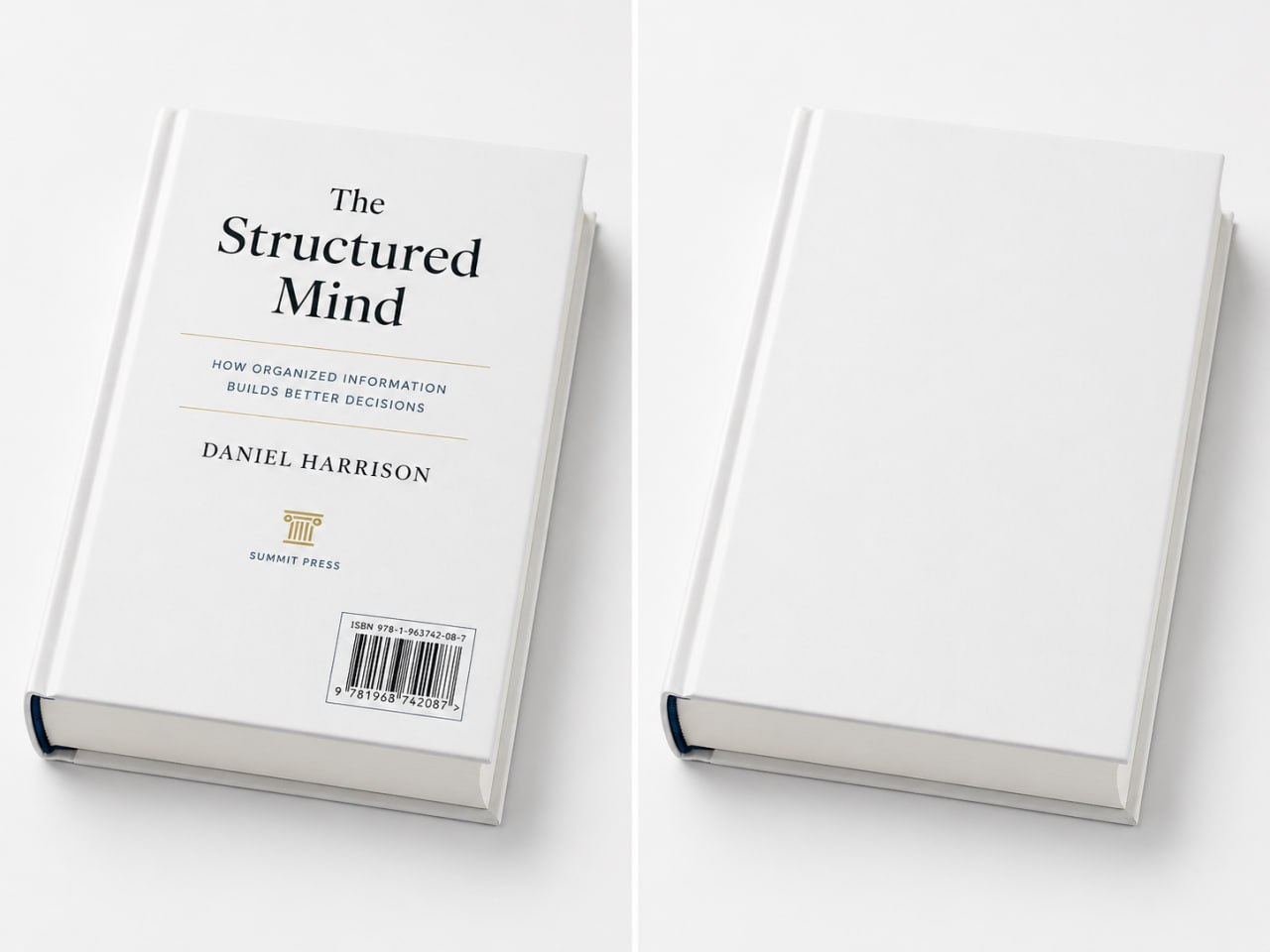
Left: book with title, author, ISBN and publisher - the search engine immediately knows what it is looking at. Right: completely blank - that is exactly what a website without schema markup looks like to Google and AI.
Mistake 2: No AI Business Card (llms.txt)
An llms.txt is a simple text file that sits at your-domain.com/llms.txt. It tells AI systems in compact form: who you are, what you offer and what content on your site matters. ChatGPT, Claude and Perplexity read this file preferentially.
Without an llms.txt you are to these systems like a contact without a business card. Nobody knows what you do, and they recommend someone else instead.
Mistake 3: No Sources, No Links, No Proof
Google and AI increasingly evaluate whether your content is supported by external sources. You write "property prices in Mallorca are rising"? Then the search engine wants to know: how do you know that? Is there a source? A link to a statistic, a study, a market report?
Websites without source citations are like a witness in court who says: "Just trust me." That no longer cuts it.
Mistake 4: The Website Only Works in the Browser
This is the technically most serious mistake - and it affects a surprising number of modern websites. If your site is built with React, Vue or a similar framework and renders purely client-side, then search engine crawlers see only an empty HTML skeleton. All the content is only loaded when a browser executes JavaScript - but crawlers do not do that.
The result: 8 out of 8 AI crawlers see an empty page. Google may index 1 out of 22 pages. Your entire content is de facto non-existent.

This is what an AI crawler sees on your website when it only works in the browser: it searches but finds nothing. The content is there - but invisible.
Live Example: From GEO Score 25/100 to a Complete Roadmap
So you can see what this means in concrete terms, I am showing you a real analysis. Not a fictional example - a real client who agreed to let me share his results here.
The client: Marco Lück, Hauskauf-Mallorca.com - a luxury real estate agent in Mallorca with over 30 years of experience, 200+ properties sold and a perfect 5.0-star Google rating.
Sounds like a strong business. It is - offline. Online it looked like this:

Left: visible, inviting, clearly recognizable. Right: same quality - but no sign, no light, no invitation. That is how Google sees your website without schema markup and llms.txt.
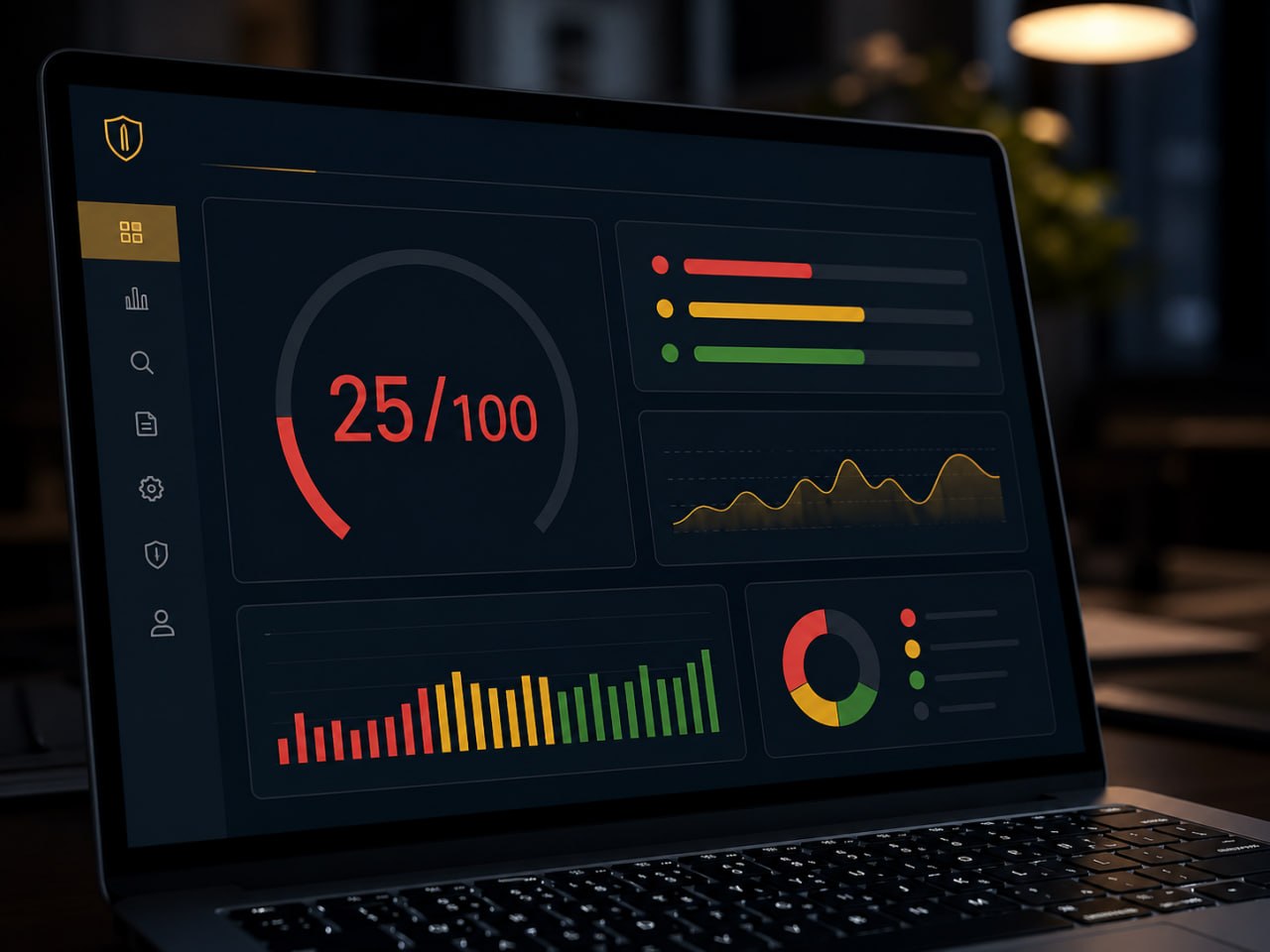
GEO Score
25/100
Critical
| Category | Score | What it means |
|---|---|---|
| Content E-E-A-T | 58/100 | Content good, but sources and authorship missing |
| AI Citability | 38/100 | AI can barely cite any content |
| Technical | 18/100 | Search engines cannot read the page |
| Brand Authority | 8/100 | Barely recognizable as a brand online |
| Schema | 5/100 | No digital ID card present |
| Platform | 5/100 | Not visible on any AI platform |
AI Visibility: 0 out of 5 Platforms
We checked whether the website appears on the most important AI platforms:
| AI Platform | Mentioned? | What is recommended instead |
|---|---|---|
| Google AI Overviews | No | Porta Mallorquina, Minkner & Bonitz |
| ChatGPT Web Search | No | Cannot technically read the page |
| Perplexity AI | No | Porta Mallorquina, Minkner |
| Google Gemini | No | - |
| Bing Copilot | No | - |
The reason: 8 out of 8 AI crawlers are allowed in robots.txt - but none can see the content. The website is a purely client-side rendered app. The HTML body contains only an empty element. All content only becomes visible in the browser.
Competitor Comparison
How the website stands compared to competitors - measured by online visibility:
| Competitor | SEO Score | Indexed Pages | Strength |
|---|---|---|---|
| Engel & Völkers | 95/100 | Thousands | Global brand, 19 offices Mallorca |
| Porta Mallorquina | 92/100 | 2,000+ | Content marketing pioneer |
| Marcel Remus | 85/100 | Hundreds | TV celebrity (VOX), Wikipedia |
| Hauskauf-Mallorca.com | 25/100 | 1 | 30+ years experience, 5.0 stars |
The crazy thing: Marco Lück has more experience than most competitors, a perfect rating and real expertise. But online he is invisible - because the technical foundation is missing. That is like being the best shop in town, but the sign is missing and the door is closed.
What We Delivered
Our analysis tool created a complete report within a day. Not just "here is the problem" - but a concrete roadmap with time estimates and measurable results:
- GEO score with 6 categories - each category evaluated and explained individually
- Competitor analysis - 7 competitors analyzed, strengths and weaknesses compared
- 95 keywords identified - with search volume, difficulty and priority
- 6 content clusters - which articles need to be written and why
- Ready-made schema templates - copy-paste ready for the developer
- AI business card (llms.txt) - created and ready to upload
- 30-day action plan - week by week, what needs to be done
And most importantly: two versions of the report. One for the CEO - in a language everyone understands. And one for the developer or agency - with all JSON files, templates and machine-readable data they need for implementation.
Estimated result: Through quick wins alone (approx. 8.5 hours of work), the score rises from 25 to approx. 53-57 points. With full implementation over 12 months: GEO score 75-85, top 5 for 10+ keywords, 3,000-5,000 organic visitors per month.
Plain Talk Instead of Technical Jargon: Why I Write Reports Differently
I went into sales at the age of 21. Merlo, Manitou - construction machines and forklifts. There I learned something that benefits me more than any marketing seminar to this day: speak the language of the CEO, the operations manager and the forklift driver.
An example: a forklift driver works 8 hours a day. When he comes home in the evening and tells his wife "I have knee pain, I do not want to do this job anymore" - she eventually says: "Stay home tomorrow, go to the doctor." The employee gets sick, is absent, costs money.
Now you go to the CEO and say: "You drive an S-Class. Not to show off - but because you want to get safely and sensibly from A to B. Why should your forklift driver sit in a poor cab for 8 hours a day? A decent cab pays for itself very quickly because the employee is less sick, has fewer knee problems and stays motivated longer."
That is not a sales trick - that is speaking the language of each level. Three people, three perspectives, one solution. I trained that for 30 years.
The SEO industry does exactly the opposite. They all speak only one language: CTR, CPA, impressions, canonical tags, hreflang, JSON-LD. The CEO nods politely, understands nothing and wonders at the end of the month why nothing has changed.
I translate.
- Instead of "schema markup" I say: "digital ID card for machines"
- Instead of "technical audit" I say: "MOT inspection for your website"
- Instead of "llms.txt" I say: "AI business card"
- Instead of "GEO audit score" I say: "your overall grade"
- Instead of "quick wins" I say: "low-hanging fruit"
That sounds simple. But it is the difference between a report that ends up in a drawer and one that gets implemented.
I Don't Implement - I Have Partners for That
My job is the analysis and the roadmap. The technical implementation - adding schema, setting up server-side rendering, writing content - is handled by specialized partners. Agencies and developers who receive a complete roadmap from us: what to do, in what order, with what expected result.
No more fumbling in the dark. The partner gets machine-readable JSON files, ready-made schema templates, a prioritized action list and the complete audit report. That is like a blueprint for a house - the architect draws, the builder builds.
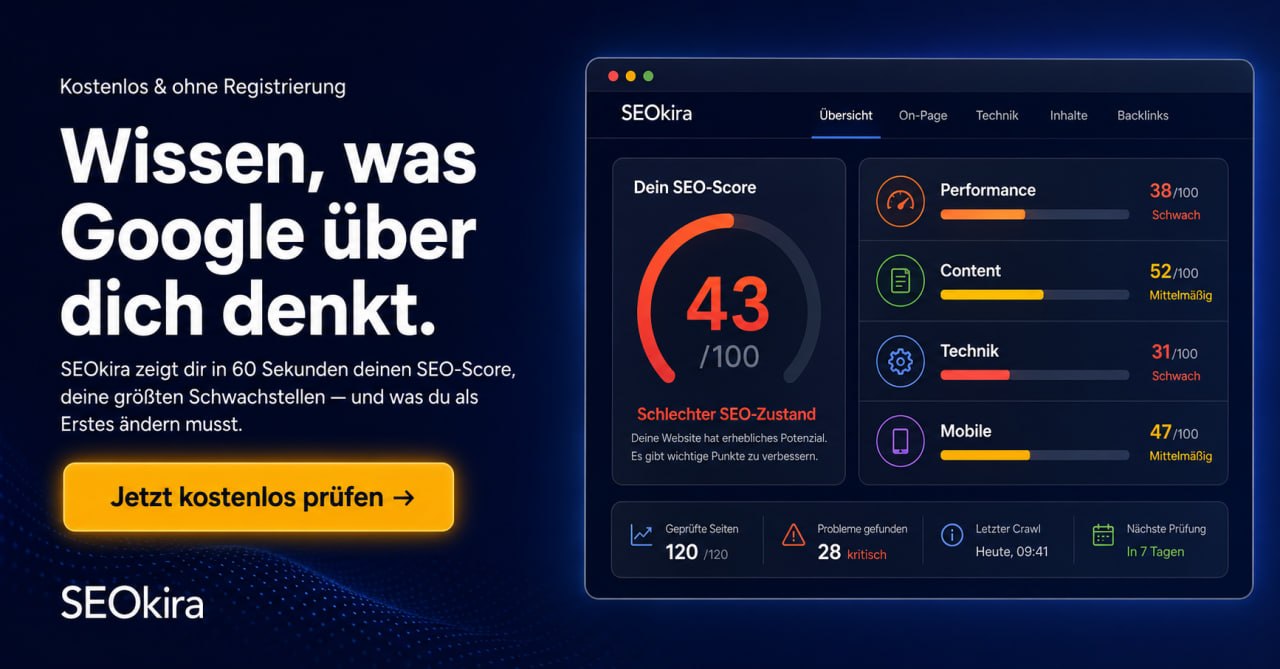
5 Things That Make Your Website Invisible - and How KIRA Finds Them
Most website owners do not even know they have a problem. Here are the five most common causes of online invisibility - and exactly why we built SEOkira.
1. Google Indexing
If Google does not have your page in its index, you do not exist for search engines. You can have the best website in the world - if it is not indexed, nobody finds you. KIRA checks in seconds how many of your pages Google actually knows - and shows you which ones are missing.
2. AI Visibility
ChatGPT, Perplexity, Google AI Overviews - these are the search engines of tomorrow. If these systems do not know your business, they recommend your competitors. KIRA tests whether AI systems find and cite you - or whether you are completely invisible.
3. AI Business Card (llms.txt)
The llms.txt is like a business card for AI crawlers. Without it, ChatGPT, Claude and Perplexity do not know who you are and what you offer. 99% of all websites have none. KIRA checks whether you have one - and creates a ready-made template for you.
4. Schema Markup
Schema markup is the digital ID card of your website for machines. Without it you are like a shop without a sign - it exists, but nobody knows what is inside. KIRA analyzes your complete schema markup and shows you what is missing and what is broken.
5. The Complete SEO/GEO Check
The individual tests give you a first impression. But the full picture only comes with a complete audit: GEO score across all six categories, competitor comparison, prioritized action list and concrete quick wins. That is exactly what KIRA does - in under 60 seconds.
Analyze Your Website in 60 Seconds
KIRA shows you immediately what Google and AI systems think about your website - your SEO score, the biggest weak points and what you need to change first. Free, no registration, results instantly.
Check with KIRA now →No sign-up, no credit card, no fine print.
Frequently Asked Questions About SEO, GEO and AI Visibility
The most important questions - in a language everyone understands.
What is SEOkira and what does KIRA do?
+
SEOkira is a free online tool for SEO and GEO analysis. KIRA checks five areas in under 60 seconds: Google indexing, AI visibility, AI business card (llms.txt), schema markup, and a technical check. You immediately get an SEO score with specific weak points. After registration, full audits with competitor comparisons are available.
What is a GEO score?
+
The GEO score measures on a scale from 0 to 100 how well your website is visible and citable for AI systems. It covers six categories: AI Citability, Content E-E-A-T, Technical, Schema, Brand Authority and Platform. The higher the score, the more likely you are to be cited by ChatGPT, Perplexity and Google AI Overviews.
What is the difference between SEO and GEO?
+
SEO (Search Engine Optimization) optimizes your website for classic search engines like Google. GEO (Generative Engine Optimization) goes a step further: it optimizes your content so that AI systems like ChatGPT, Perplexity, Google AI Overviews and Gemini can understand, cite and recommend it. In 2026, GEO is no longer optional - anyone doing only SEO is increasingly losing visibility.
What is an llms.txt and why do I need one?
+
An llms.txt is a kind of business card for AI systems. It sits at your-domain.com/llms.txt and contains in structured form: who you are, what you offer, what content is on your site and how to reach you. AI crawlers like ChatGPT, Claude and Perplexity read this file preferentially. Without an llms.txt, you are practically invisible to these systems.
What changed with the Google March 2026 update?
+
Since the March 2026 update, Google evaluates websites even more strongly based on whether they offer structured data, verifiable sources and clear authorship. Websites without schema markup, without source citations and without demonstrable expertise are losing massively in visibility - both in classic search results and in AI Overviews.
Why can't ChatGPT find my website?
+
The most common reasons: 1) Your website is a SPA (Single Page Application) that only works in the browser - AI crawlers see an empty page. 2) You have no llms.txt. 3) Your content has no schema markup and is not structured for machines. 4) Your site has no backlinks or mentions that signal trust to AI systems.
What does a GEO analysis cost?
+
A first SEO/GEO check is free - you can do it directly via our online tool SEOkira. KIRA checks your Google indexing, AI visibility, your AI business card, schema markup and does a complete technical check. Some checks are immediately available for free so you get a quick overview. After registration you can run full audits with competitor comparisons, a concrete action plan and ready-made schema templates.
What is schema markup and why does my website need it?
+
Schema markup is a digital ID card for machines. It tells Google and AI systems: this is a company, this is the owner, these are the services. Without schema markup, your site lacks a machine-readable identity. With schema markup you get rich snippets in Google and are recognized by AI systems as a trustworthy source.
Can I do SEO/GEO myself or do I need an expert?
+
Basic things like setting up Google Search Console you can do yourself. For technical tasks like creating an llms.txt, adding schema markup or setting up server-side rendering - that is what KIRA and our specialized partners are for, who can implement the analysis results directly.
Conclusion: The Best Shop in Town - With a Closed Door
There are entrepreneurs out there with 30 years of experience, perfect ratings and real value to offer. But their website is invisible - to Google, to ChatGPT, to Perplexity. And they do not know it. They only wonder why no enquiries are coming in. In my article Business Coach vs. Sparring Partner I explain why experienced entrepreneurs often choose the wrong advisor - also on digital topics.
Yet competitors with half the experience are in position 1 - not because they are better, but because their technology is right.
That is the reality in 2026. And the frustrating thing: the most important levers are not rocket science. Uploading an llms.txt, adding schema markup, fixing the sitemap - together under 10 hours of work. Can double the score. Not someday. This week. What is changing economically right now and why digital visibility is becoming even more important is something I show in the article on deindustrialization in Germany 2025/2026.
I fired two agencies before I started solving the problem myself. I want to save you that detour. Let KIRA analyze your website - 60 seconds, free, no registration. Then you will know where you stand.

I wish you every success with your online visibility - and if you have any questions, just get in touch.
All the best, Maik